Real vs fake gemstone jewellery can often be assessed by examining colour variation, natural inclusions, surface texture, weight, and seller information. However, no single home test can conclusively prove authenticity. For valuable gemstones, professional gemological testing or a reliable certificate is the safest way to verify what you are buying.
Real vs fake gemstone jewellery is easier to assess when you know what to look for, but appearance alone cannot provide absolute proof. Natural stones can vary in colour, pattern and inclusions, while imitation materials can look remarkably convincing. This guide explains five practical checks and introduces Druzy Dust’s natural-stone jewellery. Read on to shop with a more informed eye.
What Is the Difference Between Natural, Synthetic and Imitation Gemstones?
Before testing a stone, it helps to understand what “real” actually means. Natural, synthetic and imitation gemstones are different categories.
Natural Gemstones
Natural gemstones form through geological processes and can vary in colour, clarity, internal features and texture. These differences can be part of their individual character.
Synthetic or Lab-Grown Gemstones
A synthetic gemstone is created in a laboratory and can have similar chemical and physical characteristics to its natural counterpart. Synthetic does not automatically mean fake; it means the stone was laboratory-created.
Imitation Gemstones
Imitation materials are designed to resemble gemstones without having the same composition or properties. Glass and resin, for example, can create gemstone-like appearances.
5 Ways to Tell Real vs Fake Gemstone Jewellery Apart
1. Examine the Colour and Natural Variations
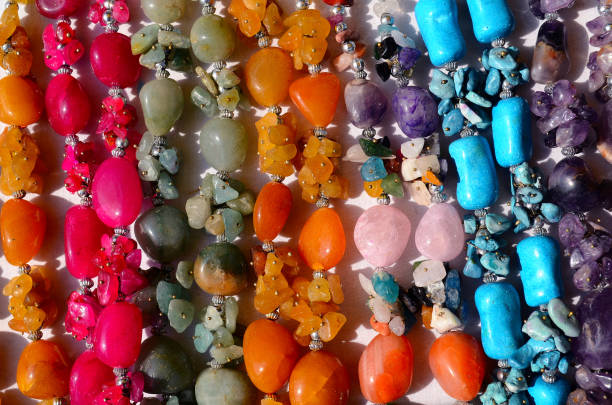
Start with colour, but do not treat it as a final verdict. Natural stones may show subtle shifts in tone, colour zoning, or distinctive patterns. A perfectly uniform appearance can sometimes be a clue, but many genuine stones can also be consistent.
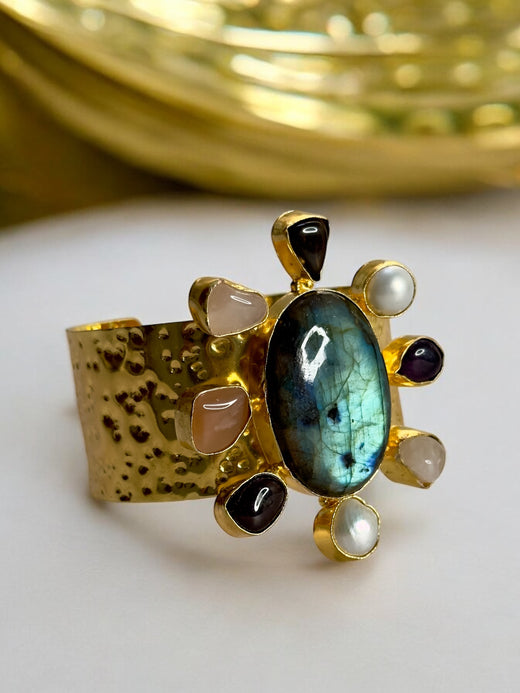
Druzy Dust’s Gemstone Cocktail Saisha Bracelet uses a random mix of natural stones including Labradorite, Rose Quartz, Moonstone, Citrine, Fluorite, Carnelian and Amazonite. Its raw, unpolished stones naturally bring variation to the design. If you enjoy learning about gemstone meanings and origins, exploring rose quartz benefits gives great context on how natural stones carry unique energy and appeal.
2. Look for Natural Inclusions and Texture
Inclusions are internal features found in many gemstones. They may appear as tiny lines, clouds, mineral traces, or variations in transparency.
Examine the stone in good light and, where appropriate, use a magnifying glass. Consider its internal structure and pattern rather than focusing only on whether it looks “perfect.”
Druzy Dust’s Labradorite Chunky Boho Ring Large and Purple Amethyst Chunky Boho Ring Large are examples of contemporary designs where the visual character of the stone is central to the piece. If you appreciate statement rings, browsing through crystal rings for women offers plenty of natural inspiration.
3. Check the Surface, Cut and Overall Finish
Look at the polish, facets, edges, and surface finish from different angles. A genuine gemstone may be highly polished, while raw or minimally polished stones can intentionally retain an organic appearance.
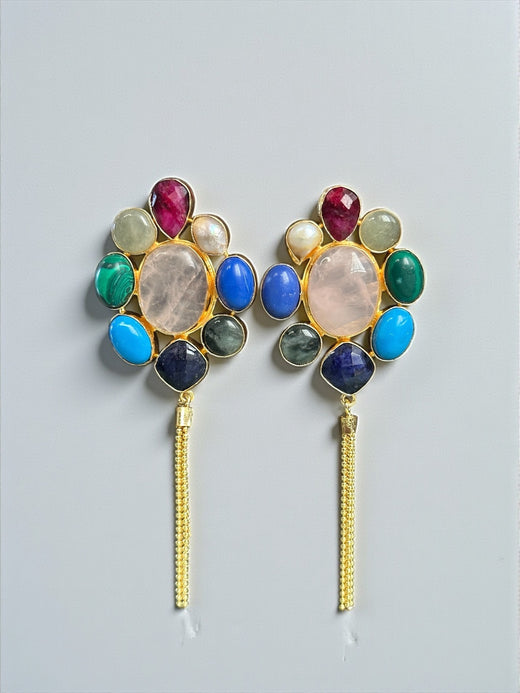
Remember that craftsmanship and gemstone authenticity are separate questions. An excellent setting does not prove the stone is genuine, and a simple setting does not mean it is an imitation. Whether looking at statement stone earrings or detailed ethnic earrings, setting quality can vary across genuine handcrafted pieces.
4. Consider Weight and Temperature Carefully
You may have heard that genuine gemstones feel heavier or remain cooler than glass or plastic. Physical characteristics such as density and thermal behaviour can provide clues, but they are not universal authentication tests.
Avoid relying on a single “touch test.” Most importantly, do not perform destructive scratch tests on finished jewellery. Home checks should be treated as preliminary observations, not proof.
5. Check the Seller, Product Details and Certification
Assess the information provided by the seller. Look for clear descriptions, transparent material details, sensible claims and accessible brand information.
For high-value gemstones, certification from a recognised gemological laboratory provides much stronger evidence than visual inspection alone. Professional testing can help establish gemstone identity and whether a stone is natural, synthetic or treated.
Druzy Dust’s gemstone collection features natural stones including moonstone, citrine, fluorite, pearl, quartz and amazonite, with product pages providing material and care information. You can also explore their insightful guide on moonstone benefits to learn more about this popular stone.
Can You Identify a Genuine Gemstone at Home?
You can make basic observations at home, but they remain preliminary checks. Colour, inclusions, texture and appearance may reveal unusual characteristics, but they cannot reliably establish every gemstone’s identity or origin.
For particularly valuable pieces, professional testing provides a more dependable answer because gemstone identification can require specialised instruments and expertise.
Real vs Fake Gemstone Jewellery: Quick Comparison
|
Feature |
Natural gemstone |
Imitation material |
|
Colour |
May show natural variation |
May appear unusually uniform |
|
Inclusions |
Can contain natural features |
May show manufactured features |
|
Texture |
Varies by stone and finish |
Designed to imitate a stone |
|
Verification |
Professional testing can establish characteristics |
Testing can help identify material |
No single visual characteristic should be treated as conclusive proof.
Does Natural Gemstone Jewellery Have to Look Perfect?
No. Natural gemstone jewellery does not need to be perfectly uniform to be genuine. Variations in colour, pattern, clarity and inclusions can be part of a natural stone’s character.
This individuality is also part of the appeal of stone jewellery. Druzy Dust’s gemstone collection features contemporary pieces using natural stones such as moonstone, citrine, fluorite, pearl, quartz and amazonite.
How to Buy Genuine Gemstone Jewellery With Confidence
When buying gemstone jewellery:
- Read the product description carefully.
- Check exactly which stone is being used.
- Look for treatment information where relevant.
- Check for transparent material details.
- Ask for independent certification for high-value stones.
- Be cautious of dramatic claims that cannot be supported.
- Remember that natural variation is not automatically a sign of poor quality.
Explore Natural Stone Jewellery at Druzy Dust
If you appreciate gemstones for their individuality as much as their style, Druzy Dust offers contemporary jewellery built around natural stones. Its collection includes bracelets, rings, pendants and other wearable designs featuring stones such as moonstone, citrine, fluorite, quartz, amazonite and pearl.
For colourful everyday styling, the Pink Rose Quartz Stone Saisha Bracelet and Green Fluorite Stone Saisha Bracelet offer wearable colour, while the Labradorite Chunky Boho Ring Large, Blue Amazonite Chunky Boho Ring Large and Purple Amethyst Chunky Boho Ring Large make the stone the focal point.
Final Thoughts
Understanding real vs fake gemstone jewellery starts with recognising that natural stones can be beautifully varied. The better approach is to combine careful observation with trustworthy product information and professional verification when the value warrants it.
Natural gemstones do not need to look identical to be beautiful. Their individual colour, texture and character are part of what makes stone jewellery distinctive.
If you are drawn to jewellery that celebrates natural-stone individuality, explore Druzy Dust’s collection and find a piece that feels distinctly yours.
FAQs
Q1. How can I tell if my gemstone jewellery is real?
Examine colour, inclusions, texture and construction, then review product information and seller credentials. These checks can reveal red flags but cannot conclusively authenticate every gemstone. For valuable pieces, professional gemological testing is the most dependable option.
Q2. Can real gemstones have imperfections?
Yes. Natural gemstones can contain inclusions, colour variations, and other characteristics formed during their creation. These features vary by gemstone type. However, imperfections alone do not prove that a stone is natural.
Q3. Is a lab-grown gemstone fake?
Not necessarily. A lab-grown or synthetic gemstone is created in a controlled environment rather than formed naturally. It may have similar chemical and physical characteristics to its natural counterpart. The key distinction is natural, synthetic, or imitation.
Q4. Will a real gemstone always feel cold?
No. Temperature is not a reliable standalone authenticity test. A gemstone may feel cool because of its thermal properties and surrounding conditions, but other materials can behave similarly.
Q5. What is the most reliable way to verify a valuable gemstone?
Professional examination and a report from a recognised gemological laboratory provide stronger evidence than home tests. Depending on the gemstone and report, testing can help establish identity and disclose whether it is natural, synthetic or treated.
Q6. Why do natural gemstones look different from one another?
Natural stones form under varying geological conditions, so differences in colour, clarity, inclusions, pattern and texture are expected. Even stones of the same type can have distinct appearances.
Q7. Can I scratch a gemstone to test whether it is real?
It is better not to scratch finished jewellery. Hardness varies between gemstones, and a scratch test can damage the stone or setting. A professional can use appropriate testing methods without relying on a potentially destructive DIY experiment.
Q8. How can I choose trustworthy gemstone jewellery online?
Look for clear product descriptions, material information, transparent brand details, realistic claims, and appropriate certification for high-value stones. Understand whether the piece uses natural, synthetic, treated or imitation materials before purchasing.